PORTUGAL
THE WALKING BODY (TWB)
Walking as Art, Learning and Collective Practice
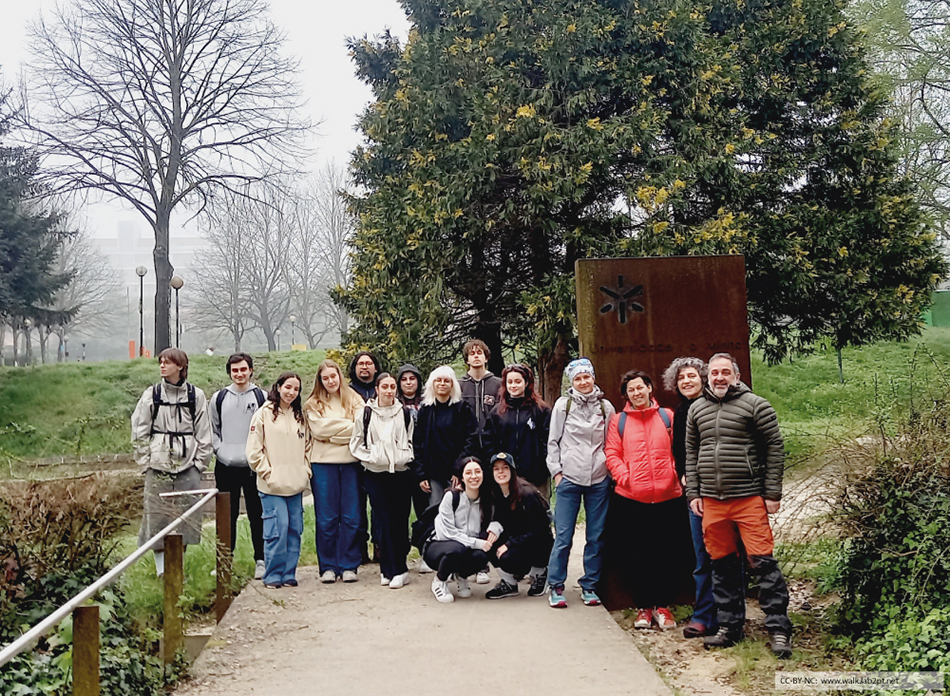
The Walking Body (TWB) is an artistic, ecological and community-based initiative that positions Guimarães as a living laboratory for walking practices, social and ecological imagination, and collective creation. Developed since 2018 at the School of Architecture, Art and Design (EAAD) of the University of Minho, in collaboration with Made of Walking / the Milena Principle, the project has consolidated itself as a reference space for research, experimentation and artistic action centred on walking.
As part of WALC – Walking Arts and Local Communities, TWB is organised between 2024 and 2027 as an annual, week-long programme of artistic activities and an art residency focused on walking. It unfolds across the urban fabric of Guimarães and its rural surroundings, coordinated by EAAD together with the Laboratory of Landscape, Heritage and Territory (Lab2PT) and in collaboration with Made of Walking / the Milena principle.
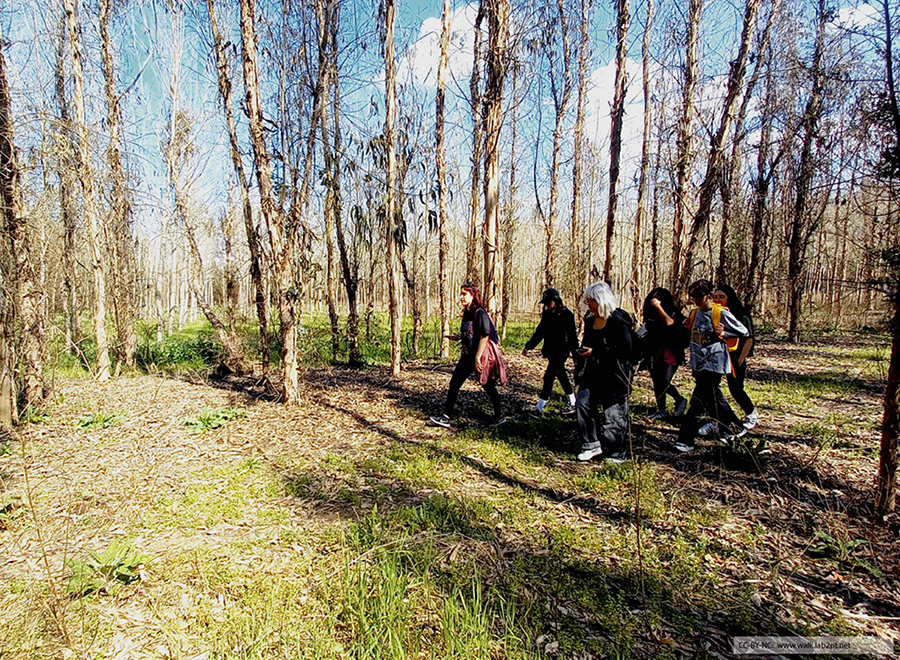
TWB places walking at the heart of contemporary artistic practice, connecting the body, the urban and peri-urban areas and the environment, and building bridges between artists, students, locals and more-than-human communities. Through walking, the project fosters new forms of artistic creation, embodied and critical thinking, perception, shared knowledge and active civic participation.
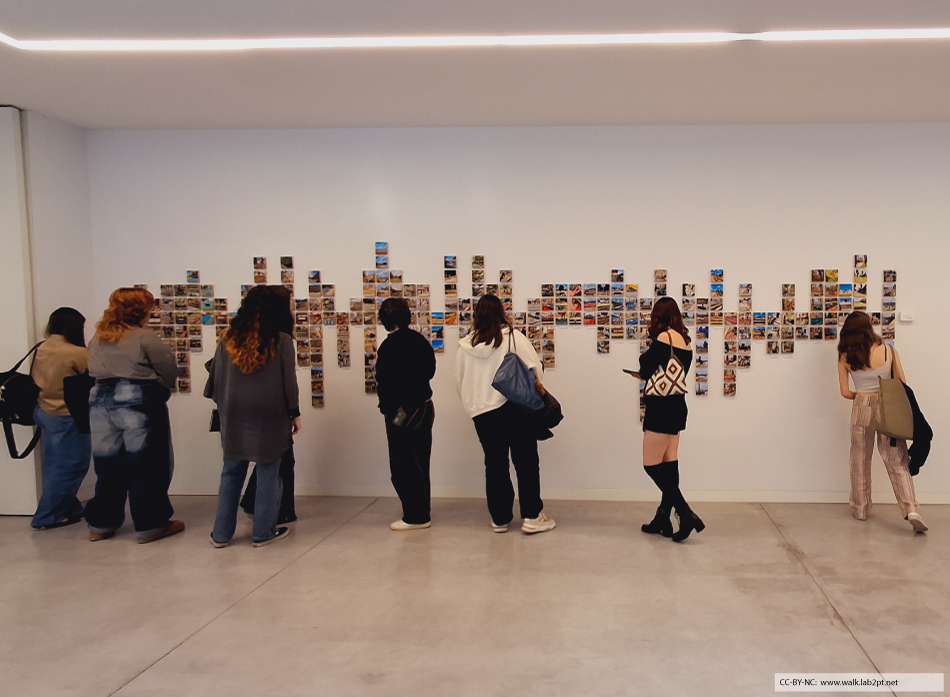
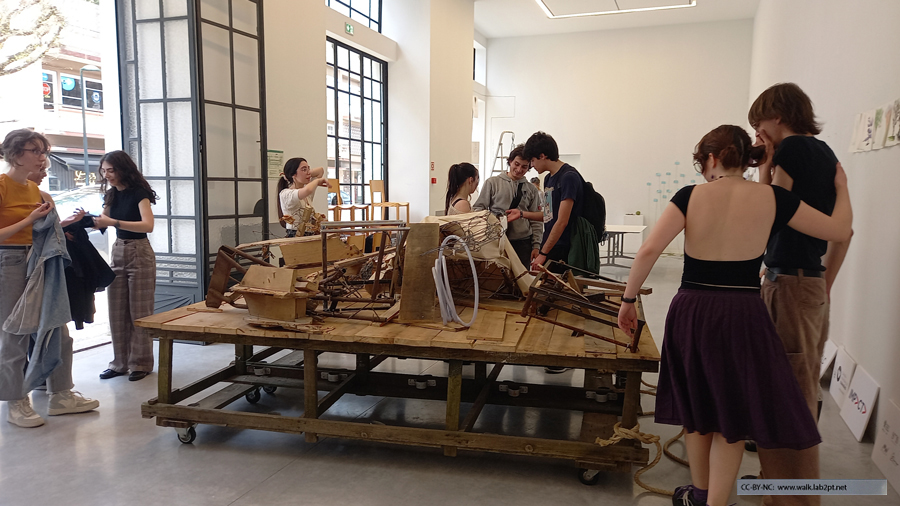
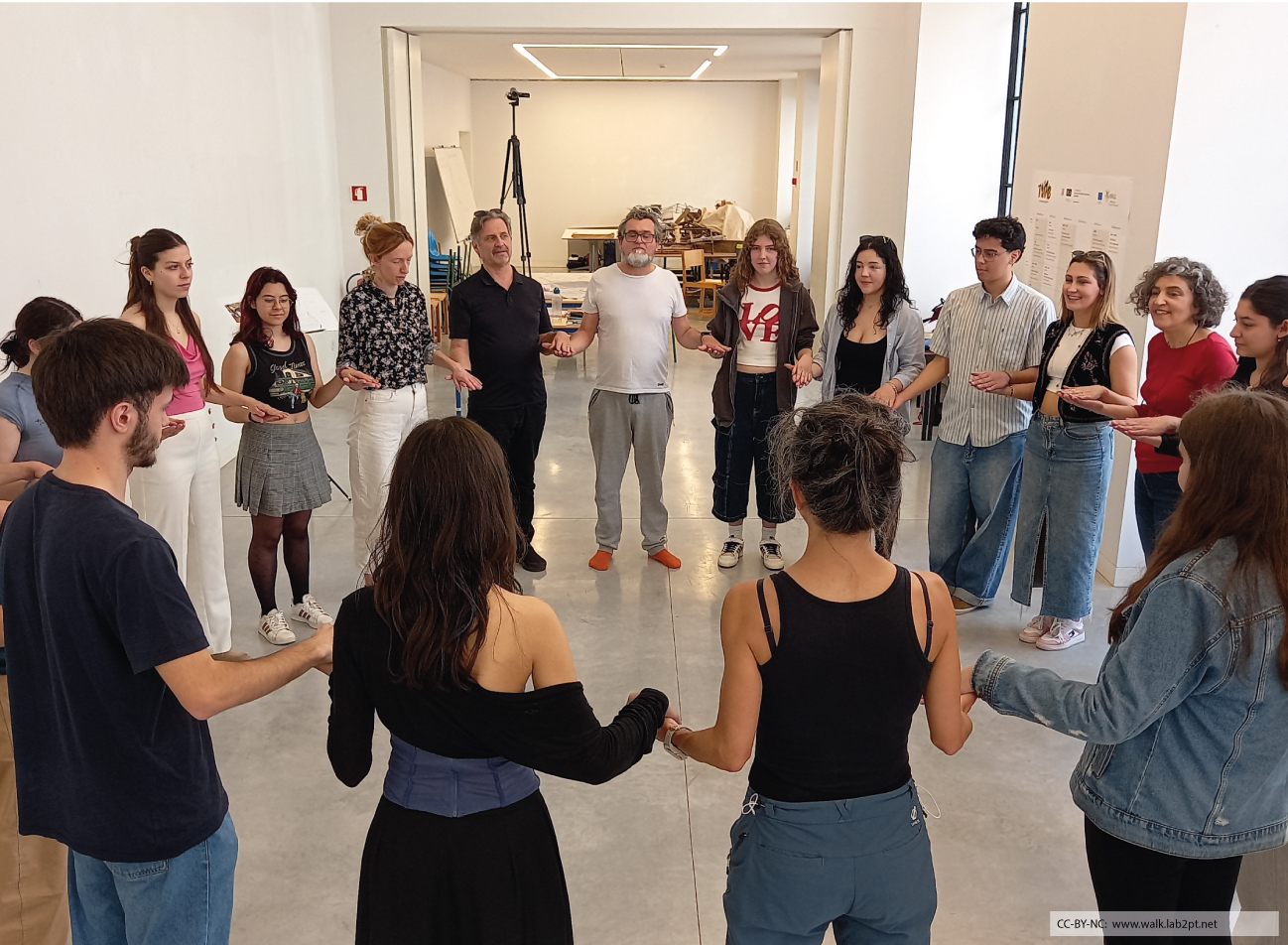
The programme includes walkshops, artist presentations, a pop-up
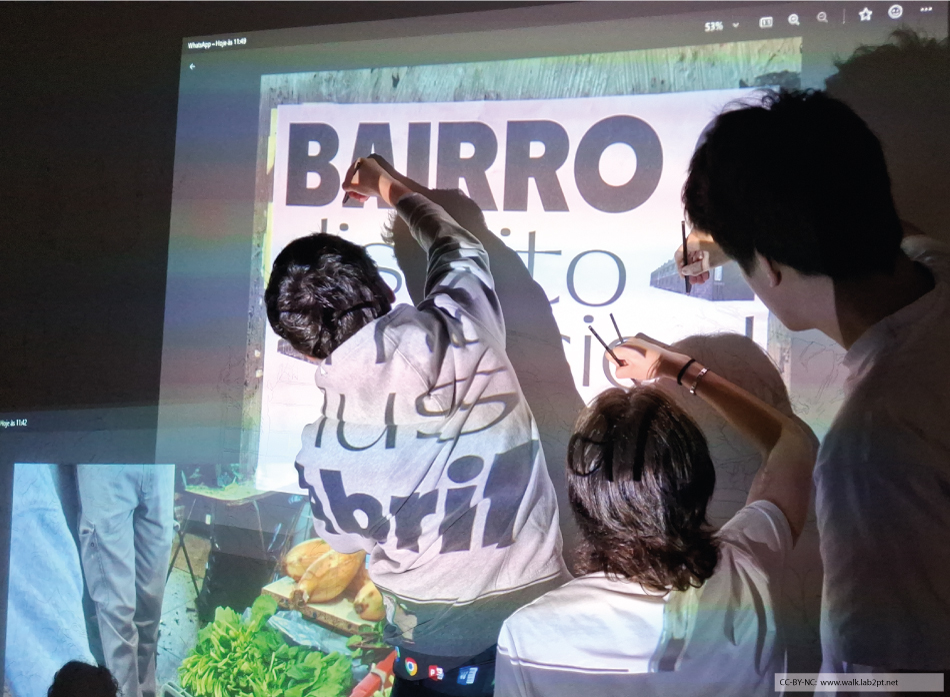
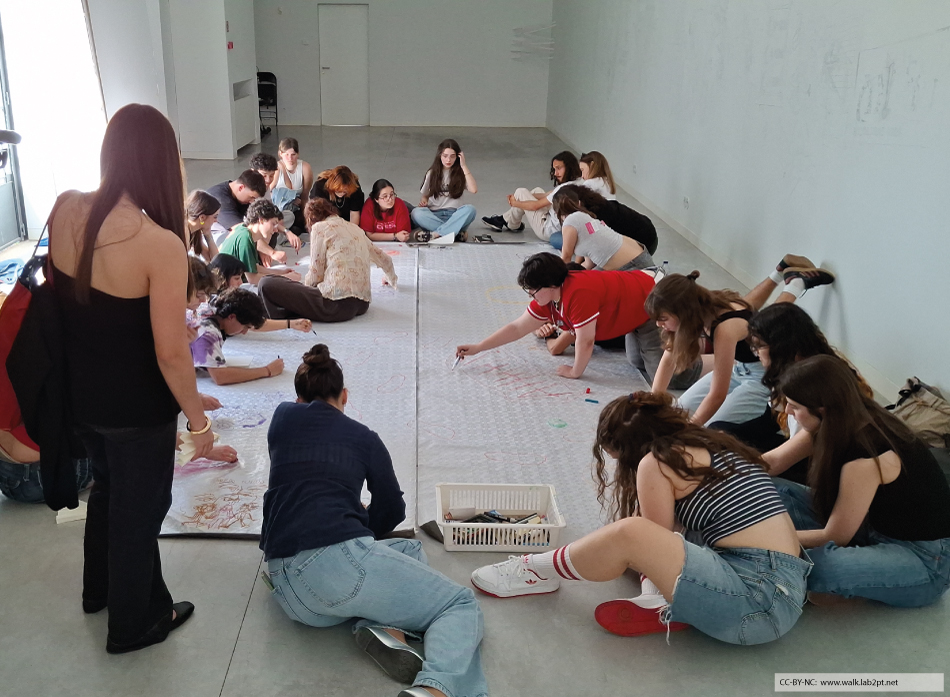
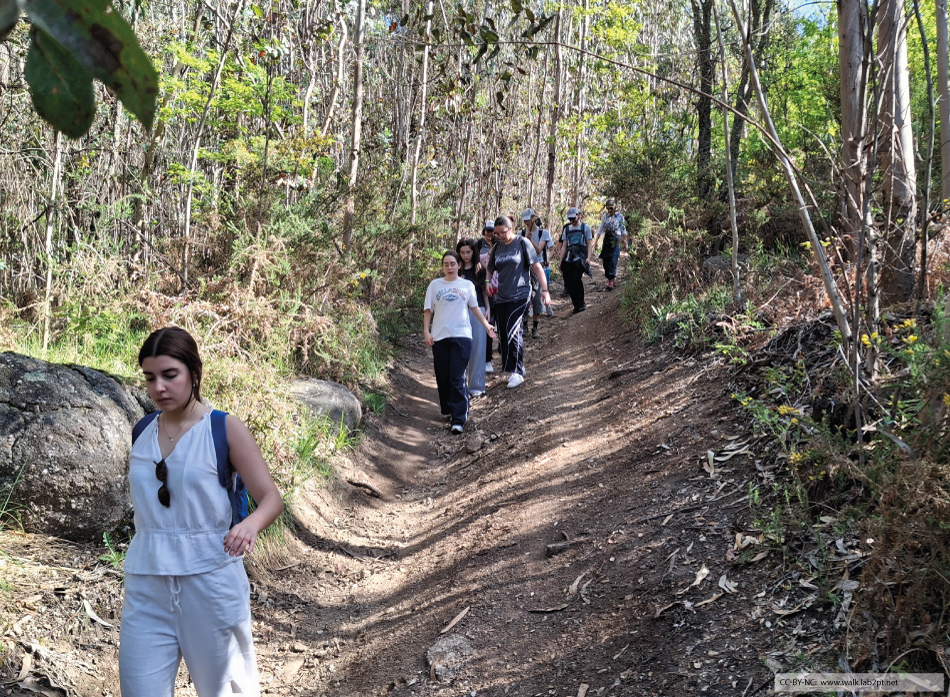
exhibition, round-table discussions and a symposium. It brings together emerging artists, students from different fields, and the city’s inhabitants,engaging with Guimarães through collective walking experiences inspired by walkshops led by international artists. Artists are selected not only for their practices, but also for their engagement with local communities and environments, reinforcing the project’s strong sense of place.
At its core, TWB is about sharing experiences and knowledge through
walking. By engaging cultural, social, ecological and activist dimensions, it becomes more than an artistic event: it is a week-long collective dialogue, reimagining the city through movement. Aligned with ecological transition goals, TWB promotes sustainable mobility, environmental awareness and active citizenship. Through innovative
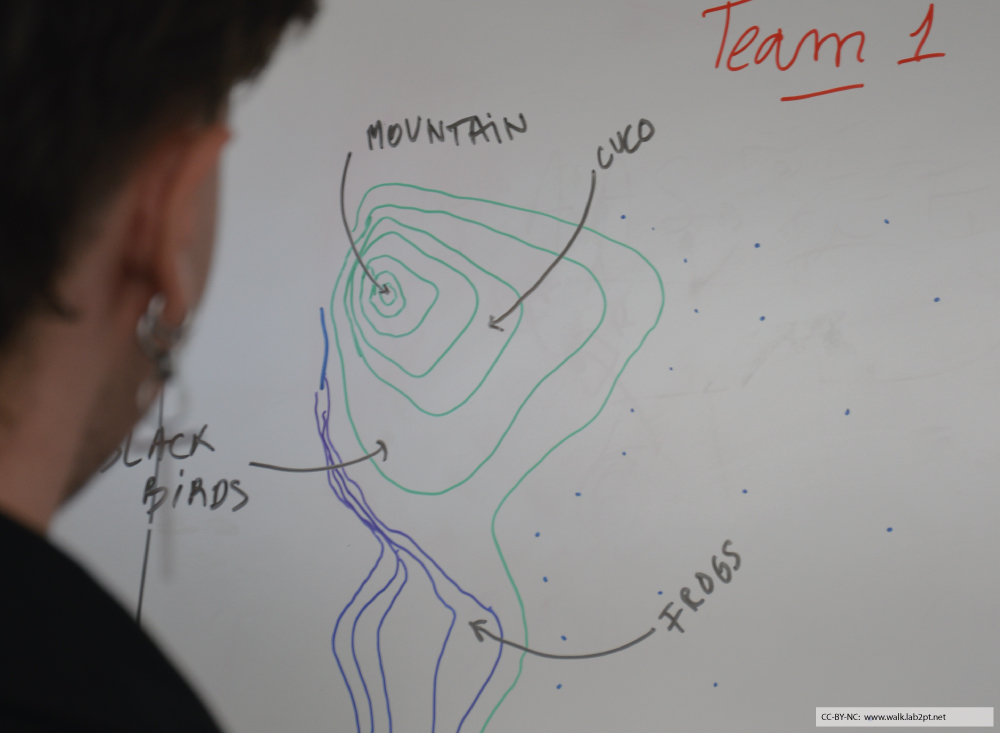
walking-art practices—combining locative media, sound, interspecies approaches and collective mapping—the project rethinks public space as a cultural and ecological commons, contributing to more inclusive and
sustainable urban futures.
The Walking Body 2026
22–28 March 2026
Curatorial Framework: Freedom is a verb – Liberdade é um verbo
The Walking Body 2026 centres on freedom as a lived, embodied condition, explored through walking as an artistic, social, and ethical practice. The programme foresees the realisation of five walkshops taking place between 22 and 28 March 2026, combining collective walks, online workshops, and artistic creation processes developed by invited artists, each working through their own methodologies and lines of inquiry. The programme culminates in a collective exhibition running until 17 April 2026.
In the context of walking, freedom is not merely a metaphor; it is inscribed in the rhythm, tempo, and spatial presence of the moving body. As philosopher Frédéric Gros writes:
“When walking, we escape the very idea of identity, the desire to be someone, to have a name and a story… The freedom experienced while walking consists in being no one, because the walking body has no history; it possesses only an eternal current of life.”
Yet this freedom is profoundly uneven. For many people—in Gaza, Ukraine, and countless other places—walking is not an act of liberation but one of survival. These are bodies compelled into motion, constrained by migration routes, transit camps, and precarious liminal geographies. Their walking is not chosen, but imposed, reminding us that freedom is never equally distributed and is always contested.
The Walking Body 2026 seeks to articulate walking as a fragile common of freedom, something that must be continuously negotiated and cared for through practices of solidarity and equality . Grounded in collective artistic processes, the project foregrounds walking as an ongoing praxis: a way of being that requires accompaniment, attentiveness, and relational commitment. Within this framework, freedom does not appear as a stable condition, but as something that emerges through co-presence, through acts of listening, making space for others, and reworking both inherited paths and those yet to come.
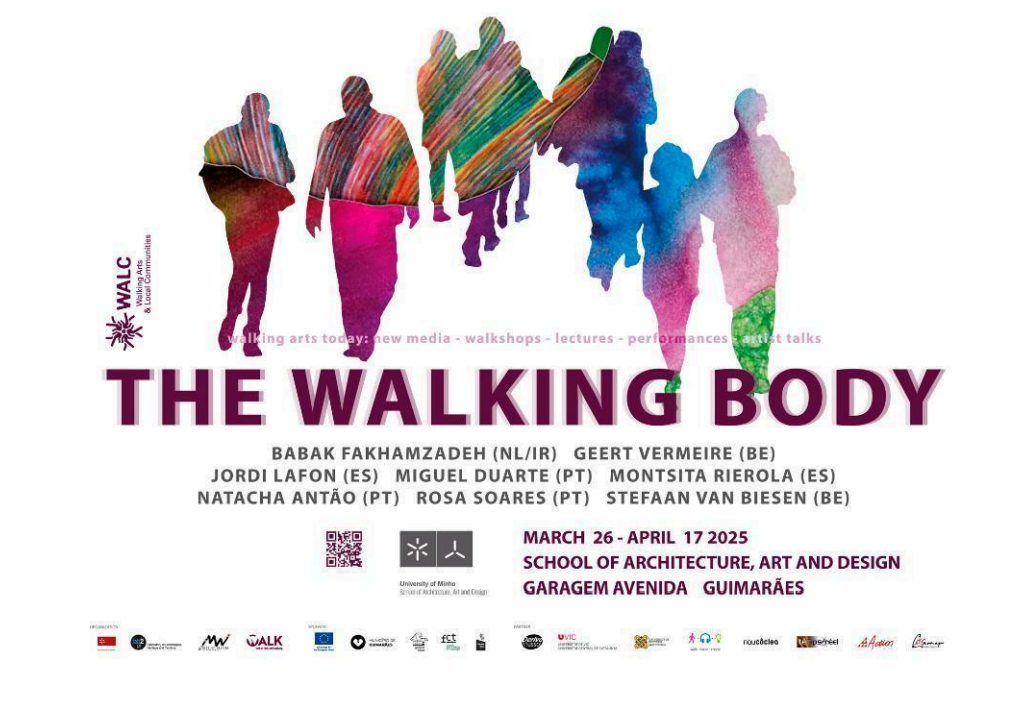
The Walking Body 2025
27 March-17 April 2025
Curatorial Framework: Communities of Change
Artists in Residence: Jordi Lafon, Montsita Rierola
The theme of this edition was “Communities of Change”, addressing the dynamic, inclusive, and plural nature of local communities, with particular attention to social and natural ecologies and the way artistic walking practices engage in dialogue with territories and their inhabitants.
The 2025 edition featured the participation of 7 artists conducting workshops: Geert Vermeire (BE), Jordi Lafon (ES), Miguel B Duarte (PT), Montsita Rierola (ES), Natacha Antão (PT), Stefaan Van Biesen (BE) and Rosa Soares (PT), as well as Babak Fakhamzadeh, who led the workshop “The Walking Body sound walk/drive workshop” and the exhibition “In Loving Memory.”
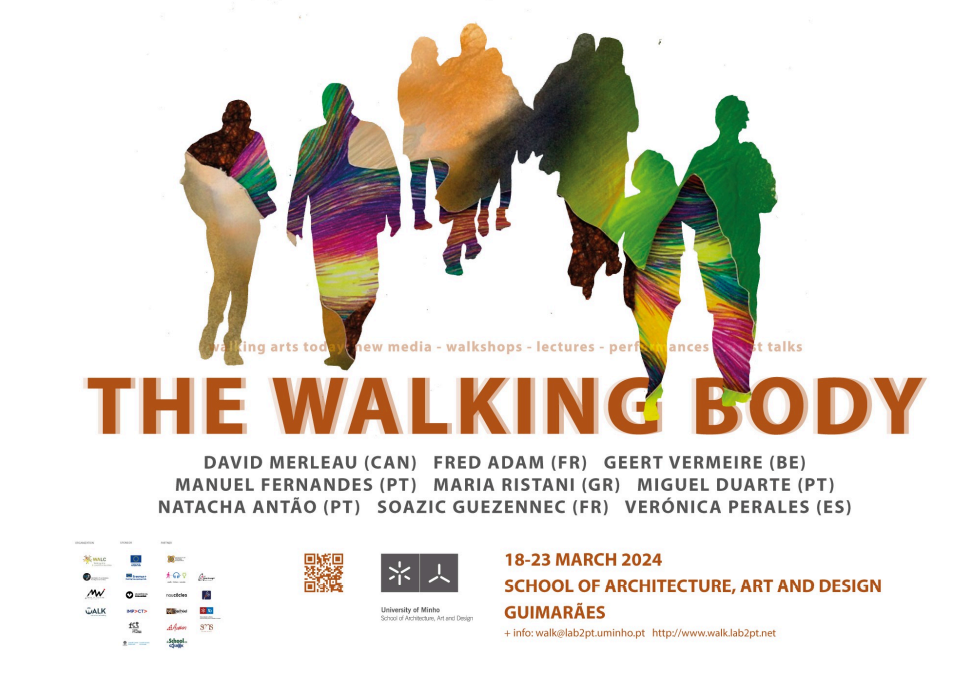
The Walking Body 2024
18-23 March 2024
Curatorial framework: More than human walking
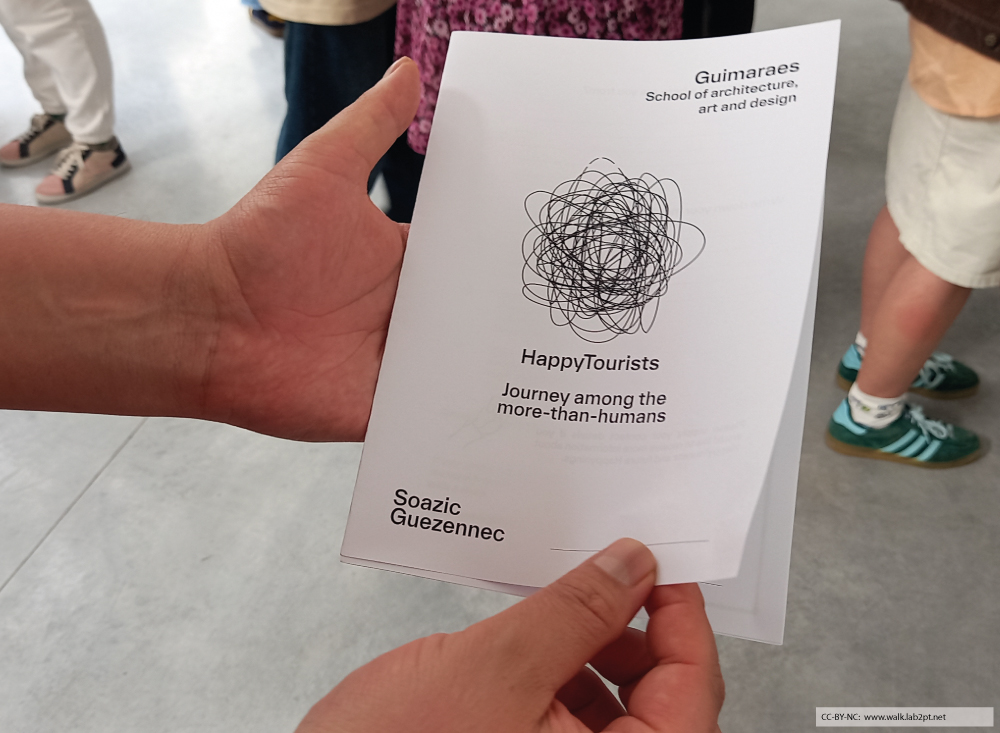
Artists in Residence: Verónica Perales, Soazic Guezennec
TWB5 had the participation of 9 artists, with the collaboration and involvement of EAAD and schools in Greece (Aristotle University of Thessaloniki) and Spain (University of Murcia).
TWB5 included the following artists: Verónica Perales (ES), Soazic Guezennec (FR), Maria Ristani (GR), Geert Vermeire (BE), David Merleau (CAN), Fred Adam (FR), Manuel Miranda Fernandes (PT), Miguel B Duarte (PT) and Natacha Antão (PT).