BELGIUM
Walking in Prosperpolder: Between Clay, Farmland and History
written by Stefaan van Biesen
Prosperpolder, located in the northernmost part of Beveren, Belgium, is crossed by long, straight roads that cut through a vast landscape of flat agricultural fields. It is a typically Flemish setting, yet at times it feels as though time has stood still here for centuries. With a little imagination, this landscape could just as easily belong to the Middle Ages, as its defining features have changed remarkably little over the centuries.
The endless rows of trees, the heavy clay soil and the open fields tell the story of generations of farmers. For centuries, life here followed the rhythm of the seasons: ploughing, sowing and harvesting. Knowledge and craftsmanship were traditionaly passed down from father to son, together with a deep sense of pride in the profession.
Many farming families lived relatively isolated from the surrounding villages. Their lives revolved around the land and the work connected to it. This isolation contributed to the development of a distinct identity: independent, sometimes somewhat reserved people who regarded their profession as a matter of honour. At the same time, they formed an important economic and social driving force in the region. As employers, they provided work for local residents and helped create a close-knit community deeply connected to agricultural life.
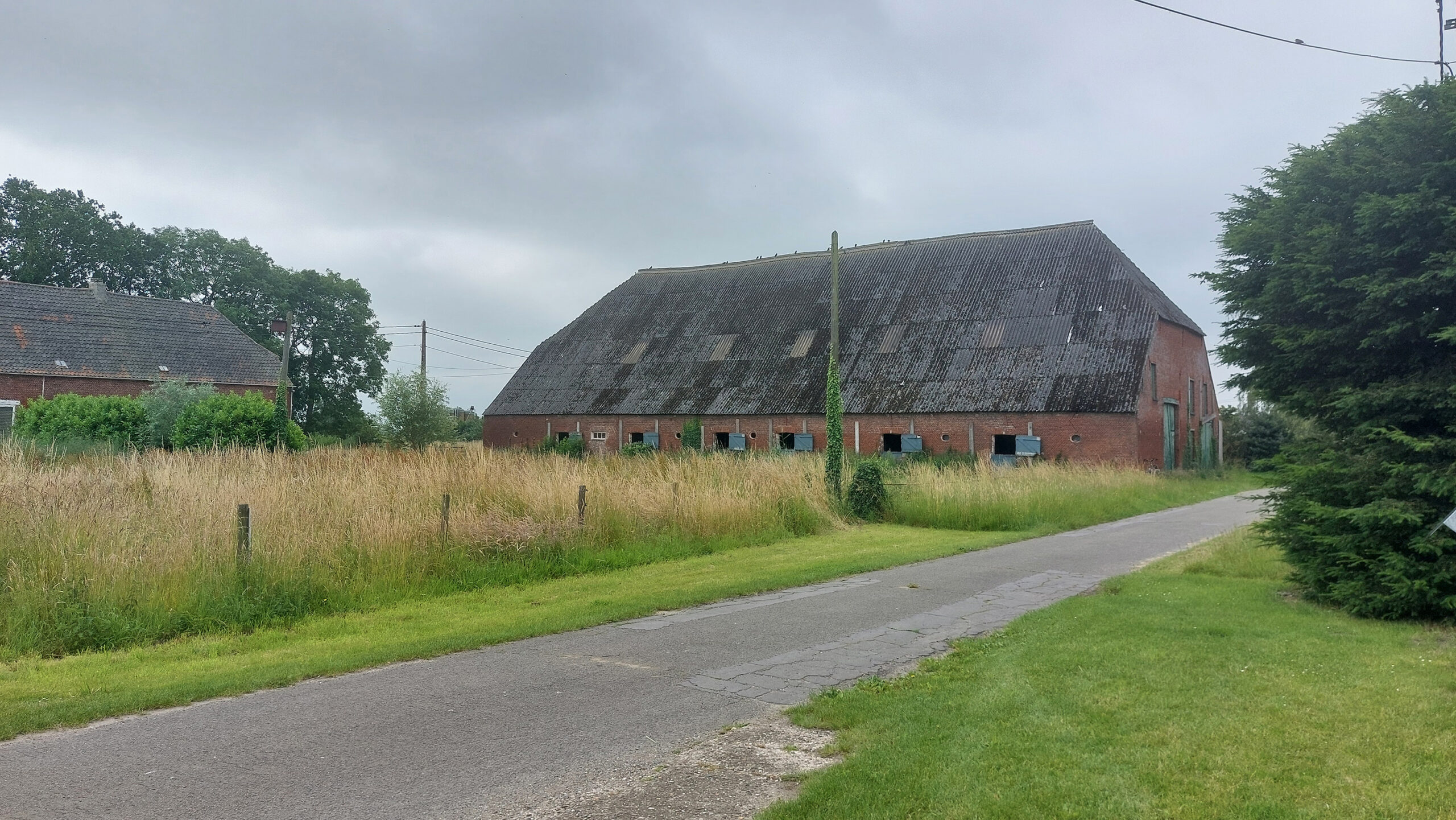
This border region with the Netherlands, which for generations served as the granary of the area, eventually leads us to De Maalderij. This impressive manor farm and mill complex is protected as a heritage monument and stands as a tangible reminder of Prosperpolder’s agricultural past. Towards the end of the nineteenth century, the original estate was divided, and its various properties came into the hands of separate tenant farmers.
Today, the entire site is undergoing an extensive restoration. Step by step, De Maalderij is regaining its former appearance. It is evolving into a proud gateway to the Groot-Saeftinghe area, where nature, heritage and history come together, and where the story of the polders is brought back to life.
At De Maalderij, we are welcomed by Peter Deckers, one of the driving forces behind the project. Together with a dedicated group of volunteers, he has devoted himself to the restoration of this valuable historic building. Today, De Maalderij has evolved into a knowledge centre where visitors can discover the story of the polder’s creation, the history of the region, and the many activities that shaped life here for centuries.
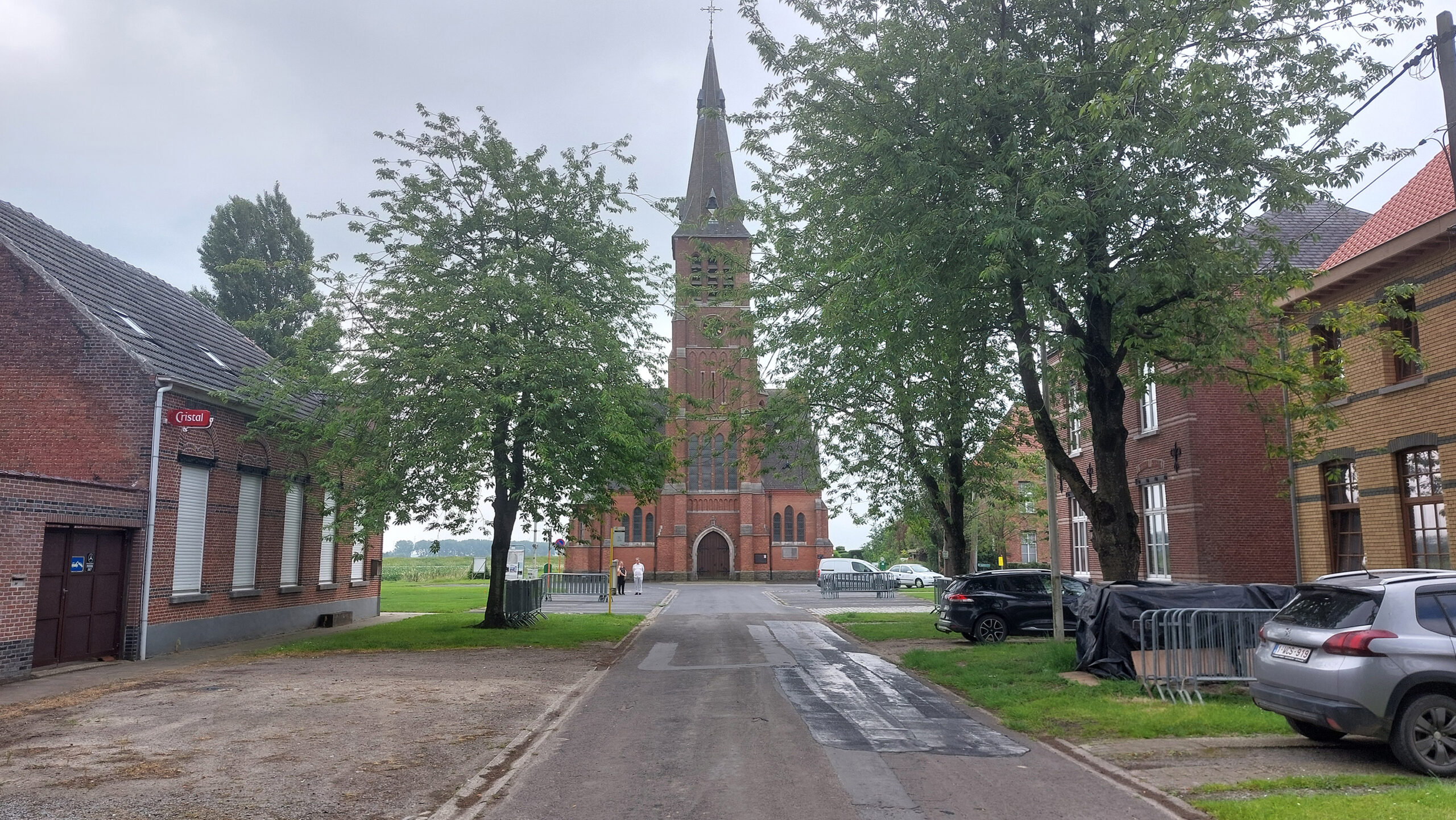
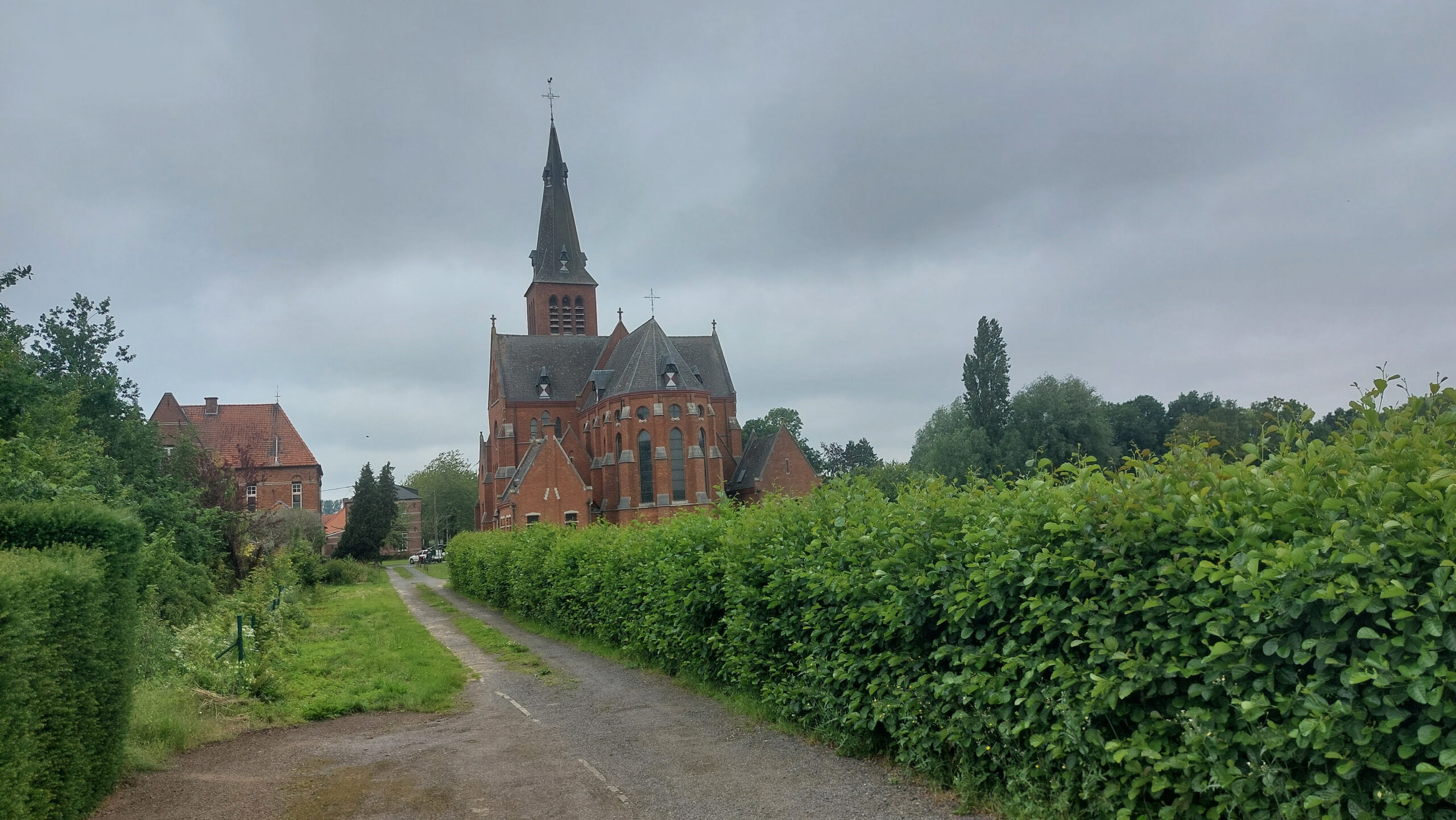
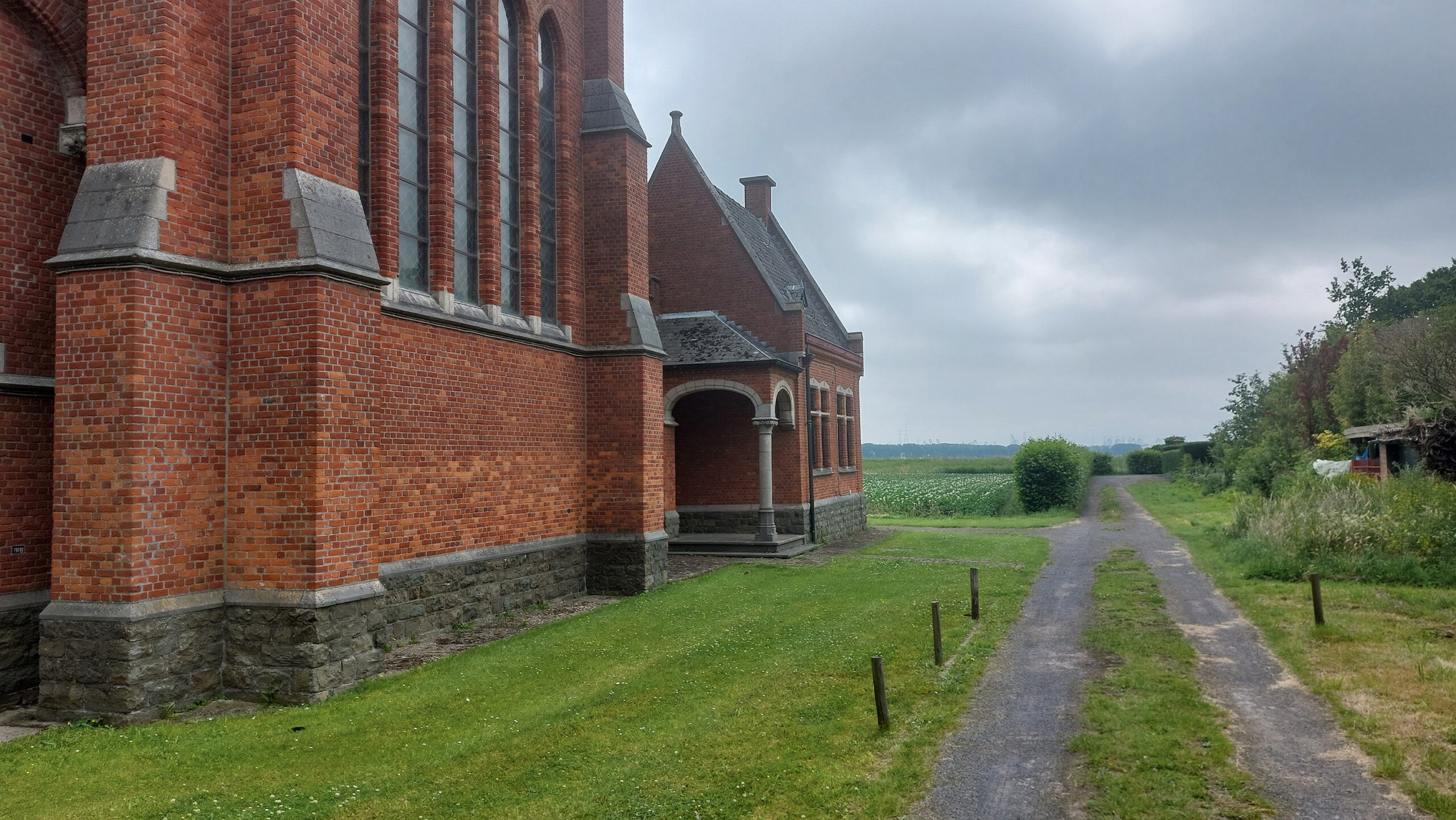
From here, it is only a short walk to Prosperdorp. Even from a distance, Saint Engelbert’s Church immediately catches the eye. Rising above the flat landscape like a beacon, its tower dominates the horizon. The village itself consists of little more than a single street, lined with houses on either side, seemingly lost amid the vast agricultural plain. There is something both desolate and irresistibly fascinating about it.
Walking through Prosperdorp is therefore a remarkable experience. On the horizon, the cooling towers of Doel come into view, while the distant hum of the harbour is a constant presence. The sounds of shipping and industry provide the soundtrack to a landscape where past and future meet. The proximity of the Port of Antwerp, together with the Port of Rotterdam one of the most important economic engines of Western Europe, serves as a reminder of how profoundly this region is shaped by the ongoing tension between development and preservation.
Yet Prosperdorp possesses a distinctive, almost timeless charm of its own. Behind its quiet façades lies a close-knit community that feels deeply connected to its surroundings. As I walk along the silent village street and approach the church, I am struck by a curious sensation. The setting evokes memories of the enigmatic paintings of the Italian Surrealist master Giorgio de Chirico. The empty spaces, the still architecture and the sense of timelessness seem as though they have been lifted directly from his work. It is a place that is not easily forgotten. Perhaps this is also why Prosperdorp once served as the setting for a successful Belgian television series. The unique atmosphere of the village and its surroundings lends the place an almost cinematic quality.
Prosperdorp will soon gain an additional artistic dimension. In this extraordinary location, the Dutch walking artist Ienke Kastelein will further develop her artistic practice as an artist-in-residence for the Made of Walking project, in which landscape, walking and human encounters take centre stage. For her, and for us as well, it promises to be an inspiring adventure that we eagerly look forward to.
Doel: Between Abandonment and Rebirth
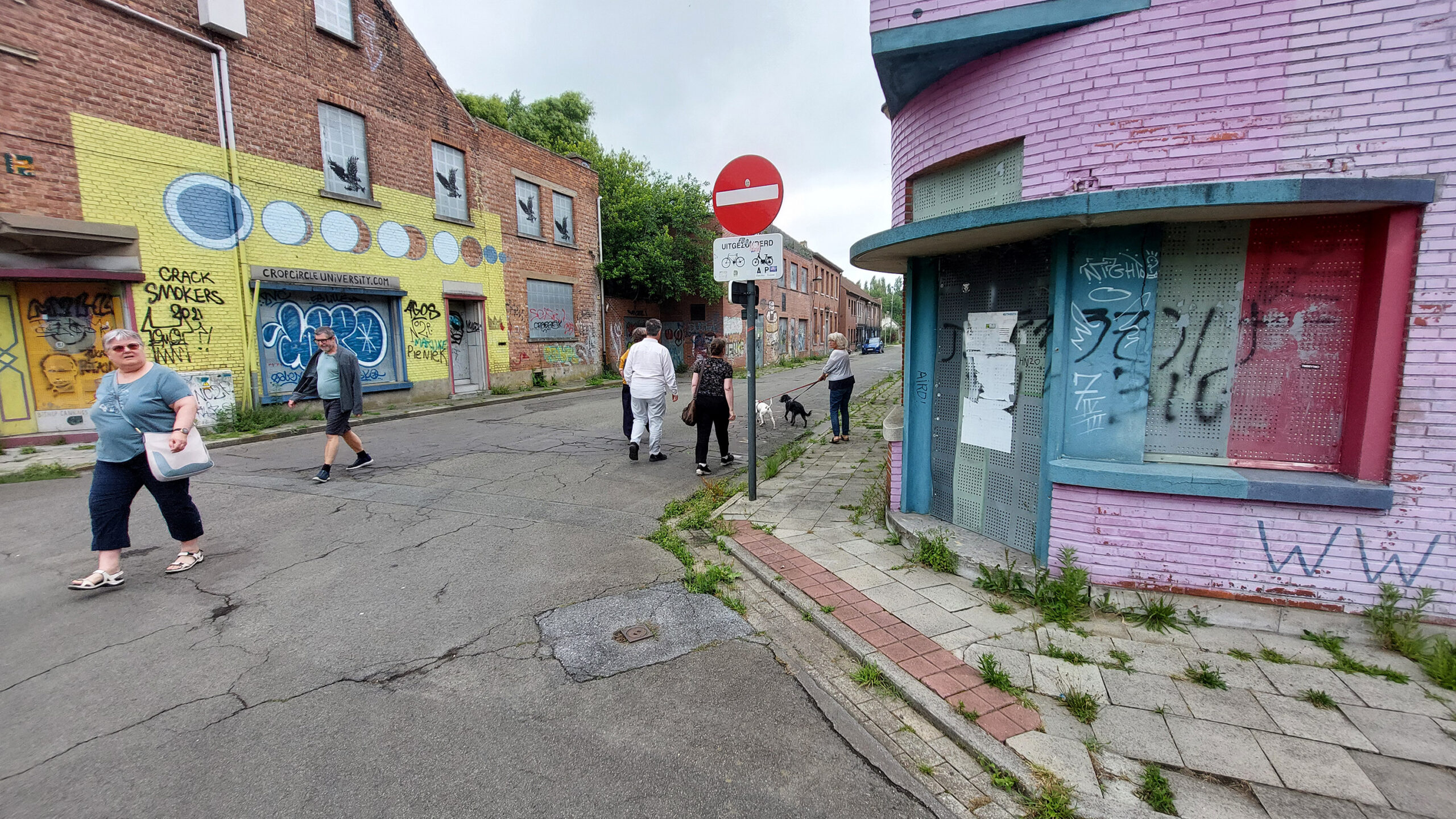
The legendary Scheldt village of Doel has captured the imagination for many years. Screenwriters, graffiti artists, birdwatchers, urban explorers, artists, walkers and cyclists all find their way here. That is hardly surprising. After all, it is not every day that you visit a village that for years symbolised an announced disappearance.
More than twenty years ago, Doel’s fate seemed sealed. The expansion plans for the Port of Antwerp designated the village as an area destined to gradually vanish. Residents were forced to leave, houses stood empty, and decay set in relentlessly. As nature slowly reclaimed its place and most inhabitants settled in neighbouring towns and villages, Doel took on the appearance of an abandoned settlement. Yet history took an unexpected turn. The port expansion plans were revised, and recently it was announced that Doel once again has a future.
Anyone walking through the village today encounters a remarkable blend of emptiness and hope. Along the streets stand houses that bear witness to a rich past, some scarred by time, others waiting for a new chapter to begin. Here and there, the first signs of renewal are already visible. Restoration work has started on the historic Hooghuis, a seventeenth-century polder house that once played an important role in village life.
Doel lies directly on the banks of the Scheldt. On the dike, overlooking the broad river, the old windmill still stands. Throughout all these years, it has remained upright as a silent witness to everything that has unfolded here. Unmoved, it has endured uncertainty, abandonment and decline. Perhaps it is precisely this stubborn resilience that makes Doel so unique.
During our visit, we meet Sabine G., one of the residents who never left the village. She has lived here for twenty years. As we are talking with her, a Dutch couple walks by. Curious, they ask whether there are still any houses for sale in Doel?
“Don’t bother,” she replies with a smile. “That’s virtually impossible. I squatted this house back then and simply stayed.”
The couple look at her in astonishment. “Twenty years ago…?”
Sabine nods. She belongs to the small group of around twenty residents who, despite all the uncertainty, refused to give up on their village. People who stayed when almost everyone else left. To some, they were stubborn troublemakers; to others, guardians of a place that was on the verge of disappearing.
During our conversation, Sabine refers to Freetown Christiania as a source of inspiration. This alternative community emerged in Copenhagen in the early 1970s, when squatters, artists and idealists occupied a disused military site and transformed it into a self-governing enclave. In an era marked by social protest and resistance to materialism and established institutions, Christiania grew into an international symbol of self-determination and alternative ways of living.
Although the comparison is not entirely accurate, Sabine recognises in that story the same spirit of independence that characterised Doel for many years. While the village officially seemed destined for extinction, a small enclave of people continued to believe in its future. Their presence gave Doel a distinctive identity: that of a village unwilling to be erased from the map.
Today, Doel once again finds itself at a turning point. The ghost village of the past is slowly giving way to a community that is cautiously awakening. Amid the graffiti, the abandoned houses, the Scheldt dike and the old windmill, a new story is taking shape, a story of perseverance, memory and perhaps even rebirth.
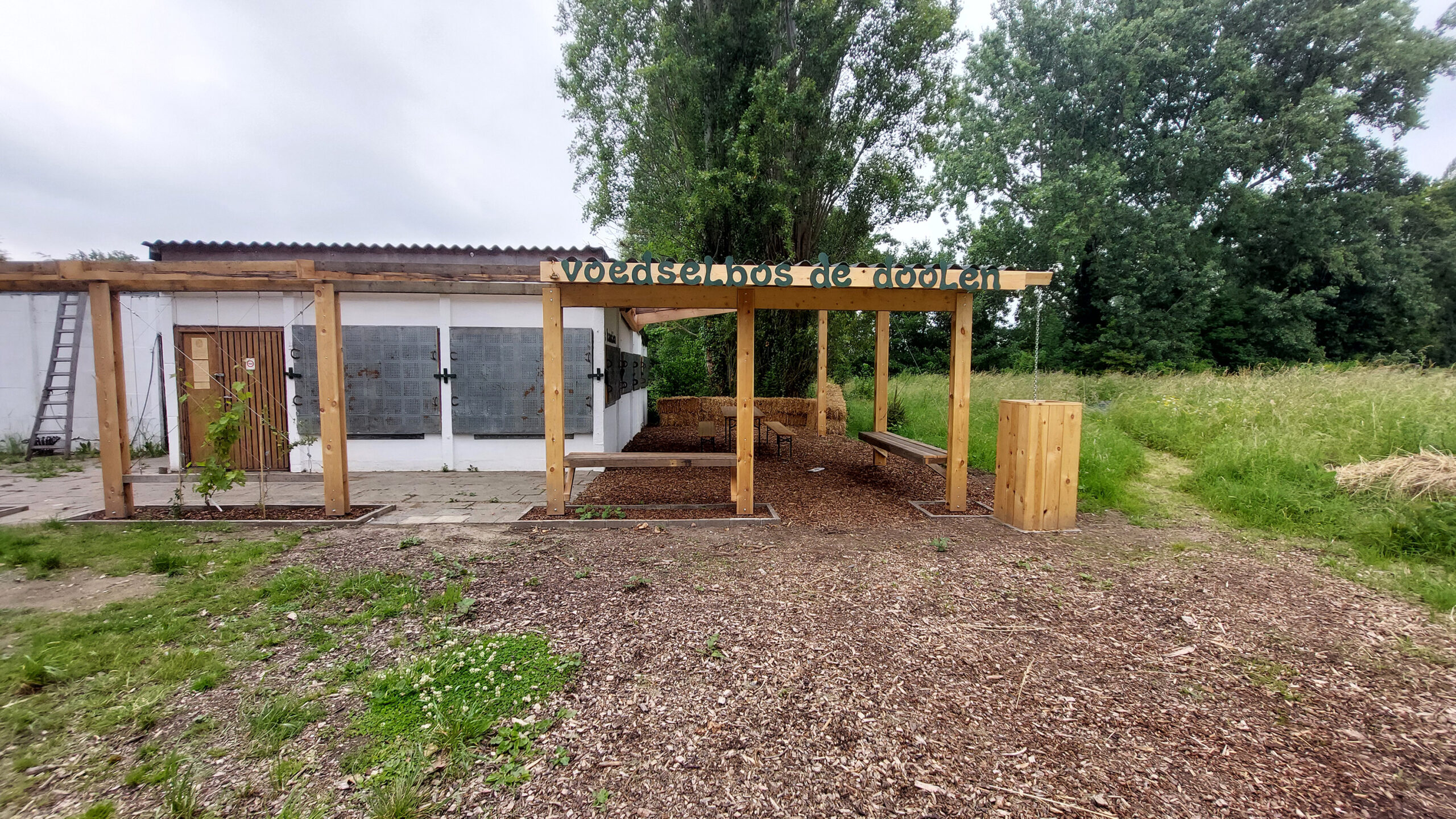
Sabine continues to guide us through the village. A little further on stands De Doolen, (the historical name of Doel), housed in what was once the village school. Over the years, this place has grown into a symbol of resistance and resilience: resistance against the decline of the village, against the phenomenon of disaster tourism that long treated Doel as a curiosity, but also against the constant uncertainty surrounding the future of the community.
Although it was recently announced that Doel has been granted a new future and may rise from its ashes like a modern-day phoenix, not everyone welcomes this news without reservation. Among those who stayed throughout all these years, a certain degree of distrust remains. Too many promises have been made in the past, only to disappear once again.
Today, De Doolen functions as an alternative cultural centre and enjoys a strong reputation, particularly among younger audiences. Concerts, film screenings, exhibitions, gatherings and a wide range of activities are bringing new life to the village. It is a place where creativity and civic engagement come together, and where a renewed sense of energy can be felt. For many, De Doolen has become a beacon of hope for the future of Doel.
Thanks to Sabine, we also have the opportunity to visit the food forest. On the former football grounds of New Saeftinghe, volunteers from De Doolen, together with various partners and organisations, are working on a remarkable project. What was once a sports field is now being transformed into a green landscape filled with fruit trees, shrubs and native plants.
The food forest symbolises the rebirth of the polder village. Doel was meant to disappear to make way for the expansion of the port, yet the village endured. More than that, it remained alive thanks to the people who devoted years of effort to preserving it. The forest honours their commitment. Small plaques attached to several trees commemorate residents, volunteers and campaigners who helped shape this story.
We pause for a moment beside a walnut tree (Juglans regia ‘Buccaneer’), planted in memory of the volunteer Manuel Crauwels (1972–2020). Behind the tree, we notice several other commemorative plaques. Further on, a high-voltage electricity pylon stands silhouetted against the sky and, just beyond our field of vision yet unmistakably present, the imposing cooling towers of Doel rise above the landscape. The contrast between nature, industry and human memory is particularly striking here.
The food forest now contains around one hundred trees and four hundred shrubs. In the exuberance of late spring, everything is in bloom. Volunteers maintain the site with remarkable dedication. This is more than a green project; it is a place where people are quite literally planting a future. Every tree bears witness to trust, perseverance and a sense of belonging.
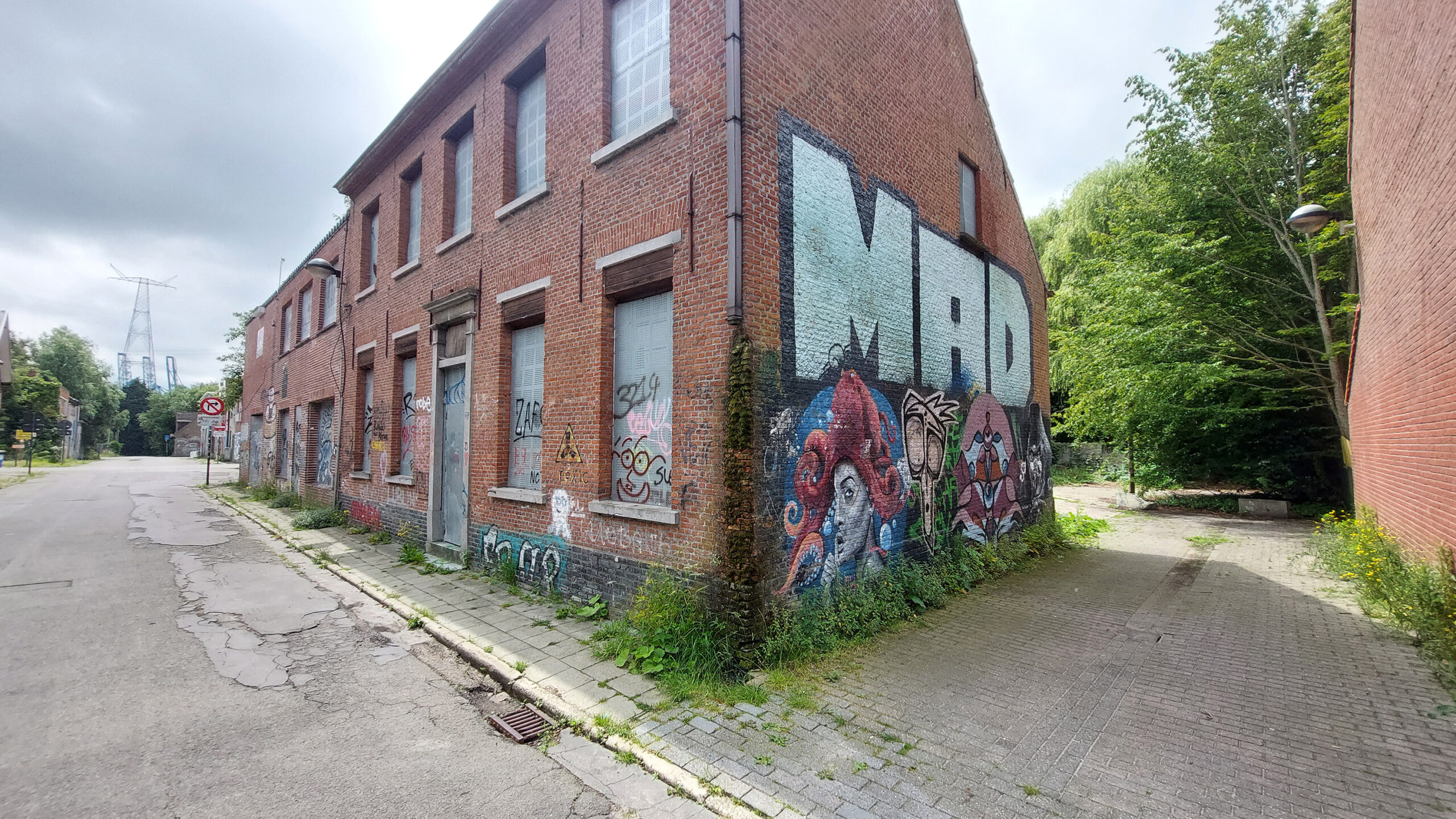
Through this green oasis, we walk back towards the village with Sabine. Remarkably, Doel now seems less deserted than when we first arrived. We pass boarded-up houses whose colourful graffiti is slowly fading under the influence of weather and time. Behind every wall lies a story. What were once signs of decline now carry a certain poetry and mystery.
As we walk through the streets, we briefly close our eyes and imagine how the Athenian artist Katerina Drakopoulou might wander here, observing and working. What a remarkable encounter that would be: an artist whose practice is rooted in walking, in a village that has itself travelled a long road between disappearance and survival. The connection feels almost self-evident.
For places, too, require attention, care and affection. With every step, we begin to see Doel differently. No longer as a ghost village or a curiosity, but as a living community. A place where people stayed when almost everyone else left, and where space is once again emerging for hope. Thanks to those who live here, work here and continue to persevere, that future is gradually becoming visible.